Showing posts with label Poetry. Show all posts

Sunday, April 10, 2022

When We Were Very Young & Now We Are Six


Image credit: Goodreads

I used to read a fair amount as a child and then I completely stopped all through high school. All through those informative years, I think I only read 2 books in their entirety. I didn’t get back into the joy of reading until I was eighteen and I got a really, really bad flu. The day I got it, the only other person who could open the store where I worked flew off on their honeymoon, so I was coming in to work until my second person arrived and relieved me. I remember it being so bad that I couldn’t watch TV, the light and colour would just add to the headaches and nausea, so I picked up my dad’s copy of The Fellowship of the Ring and began to read. And continued to read. And continued to read. And I have no stopped reading since.

I share this little anecdote because I am reminded of it right now, day five into my first bout of COVID. While I’m lucky and grateful that I can recover at home, I’m not going to lie, it’s horrible! But the silver lining is that it has given me the opportunity to revert back to being a sick child and getting lost in the magic world of books. Seeing as my head’s filled with cotton right now, I’ve decided to take it really easy and read classic children’s poetry: When We Were Very Young and Now We Are Six by A. A. Milne. 
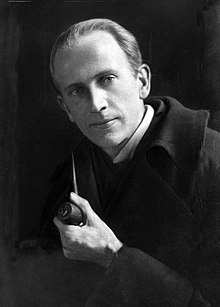
Image credit: Wikipedia
These cute little collections are devoted to Milne’s son Christopher Robin. A series of nursery rhymes, as well as the day-to-day adventures of the imaginative and innocent child. Light, sweet, and accompanied by gorgeous illustrations by E. H. Sherpard, When We Were Very Young and Now We Are Six perfectly depict innocence, creativity, and awe of childhood. The idea that every day can be an adventure, you can say anything silly and it will be taken as adorable and creative rather than judged meanly, and absolutely everything has a hidden life of its own. Milne takes simple ideas like a king asking for butter and turns them into a whole nursery singsong production that tells a sweet and pretty tale. 


The nostalgia and golden age vibes that reading these poems had given me this morning has worked just as well as ginger tea and butter menthols in soothing my discomfort and transporting me to a place of calm and warm. 

Author: A. A. Milne, 1924 & 1927

Published: Methuen & Co Ltd (Great Britain), 1924 & 1927

Tuesday, January 25, 2022

The Complete Tales and Poems of Edgar Allen Poe


Image credit: Penguin Books

It’s been a bit of a long bout between reading adventures. As a reader I have been trying to exercise and strengthen my abilities by juggling. Whilst I have concluded that this is something that I can do, it is not something that I like to do. The last book that I closed the cover on was one that I had been working on solidly for months. Plucked from the shelf with the intent of serving as my bedtime reads with tea in the evening and then morning reads with coffee, sharing my attention between the two books meant that this one took me absolute ages. An epic challenge that I have finally triumphed over, this book was The Complete Tales and Poems of Edgar Allen Poe.

Featuring absolutely everything from Poe’s gothic thrillers such as The Fall of the House of Usher and Murders in the Rue Morgue, to his Verne-esque tales of scientific adventure, classic adventures tales akin to Louis Stevenson, and of course his various poems, this book is an absolute rollercoaster of a reading experience. Being a chunky anthology, I most certainly would not recommend going through it in one sitting. My thought process behind my choice to read it was to read a tale or two before bed in nice, manageable instalments. Even so, Poe’s incredible prose, long-winded descriptions, and sometimes brain-imploding plots are definitely not the light evening read I had envisioned. 

Of course.

Image credit: Library of Congress

Most modern readers will probably only know Poe for The Fall of the House of Usher, The Pit and the Pendulum and The Raven and if there is one thing that I have discovered from reading his collected works, it is that he was such a well-rounded and versatile writer. At any point within these pages one could mistake the story for one from Jules Verne or Robert Louis Stevenson. Whilst some tales are an absolute struggle, others are gripping, thrilling, and captivating from the get-go and –at the end of it all- one cannot help but feel a little smarter and more culturally enriched for having read them all. 

Author: Edgar Allen Poe

Published: Random House, Inc., New York, 1938. Penguin Books, 1982.


Saturday, December 14, 2019

Fragile Things

Image credit: Pinterest
Most of my readers (if indeed I have any at all) will probably know that I adore stories and the telling of them in all their forms. What you may not know is that I am also an aspiring writer with my first story in the works (a collaboration with my grandmother). Recently, I had hit that horrible, dark, and seemingly immovable wall of writers’ block and the work on my first draft has been suffering aaand making me somewhat reluctant to do anything (hence the terrible gaps between book reviews).
But I am happy to say that I have finally managed to scale that despairingly tall wall and it was thanks to Neil Gaiman! Reading his anthology of short stories and poems, Fragile Things, reinvigorated my love of narrative and stirred a little current in the stagnant pool that had become the narrative flow of my story. So... my greatest thanks to you, Neil.

Fragile Things is a collection of short stories and poems that both entertain the readers and work as a wondrous exploration into literature, genre, the longevity of both, and how past authors’ works affect the present. Beginning with a mystery that screams Sir Arthur Conan Doyle, transcending into delightful young adult sci-fi, crisp and clever poetry, explorations into Norse mythology and faerie tales, Lovecraft, Poe, and finally a spin-off of one of Gaiman’s own most celebrated works.

What I loved the most about this book was how much it said about the author. Gaiman is a person who really adores stories and Fragile Things shows just how much stories and literature in general has affected and shaped him. The glorious melting pot of genres and narrative tropes that is this book is truly inspiring and a real celebration of stories and their wonder.

Image credit: HarperCollins Publishers
Gaiman shows off all his creative muscles with this collection, producing fantastic narratives that are original, but at the same time are reminiscent of other canonical works.

This was also one of the few books that my co-workers have seen my nose buried in and have jerked me out of my reverie with exclamations of “how good is it?!” (and I try to read a book a week, so they see me with my nose buried in a lot). Anyone, absolutely anyone who loves reading must read Fragile Things!


Fragile Things is a collection of short stories and poems written by Neil Gaiman. It was published in 2006 by Headline Review, an imprint of Headline Publishing Group.

Saturday, May 25, 2019

Inferno

Image credit: Booktopia
I guess for no other reason than it’s considered a canonical classic and I had never read it before, this week I took a little tour of Hell with the first part of Dante’s epic Divine Comedy, Inferno.

The poem, a splendid trek composed of 34 cantos/stanzas, tells the story of Dante’s being lost in a dark wood (what can best be described as a midlife crisis) and attempting to climb a mountain only to find his way barred by three fearsome beasts. Terrified, his evening becomes stranger when the shade/ghost of the poet Virgil comes to his aid and takes him on a journey through the nine circles of Hell as a means of teaching him to recognise and reject various forms of sin if he’s to end up in the good place.

Despite being an avid reader and a total lover of literature, I really struggle when it comes to poetry. Sadly, it’s a form of writing that my brain cannot fathom and therefore, I can’t really appreciate its majesty as devoted (cleverer) audiences can. However, this week I gave it a shot and came out of Dante’s Inferno feeling a little more cultured and surprisingly moved.

While the references and metaphors may have gone over my head somewhat, what I really enjoyed about Inferno was it’s simple narrative of the journey and the incredible imagery that Dante creates. The nine circles of Hell, each a new and even more horrifying realm of torture and torment than the last, really are the stuff of nightmares. For anyone in deep with those belief structures, it’s the equivalent of having a super horrible hangover in that it’s so painful and sick/fear-inducing enough to make you steer clear from the stuff that got you there.

Image credit: Encyclopedia Britannica
While a fair portion of the poem is written with a dreamlike, majestic, even ethereal tone, a great contrast to the vile, dank, and sordid environments, there are moments during the poem in which Dante falls into a crassly comedic way of describing the places and people, which very nicely gives this sense of mortal man’s malleability and how he can be swayed from good to evil.

The poem itself is metaphoric, dreamlike/nightmarish, and provocative, it might not be the best thing to read right before bedtime, but it’s pretty damned cool.


Inferno is the first part of Dante’s Divine Comedy, written in 1320 and followed by Purgatorio and Paradiso.

Wednesday, January 24, 2018

Beowulf

Image credit: Barnes and Noble
It doesn’t matter if it’s an epic novel like Lord of the Rings, a series of adventures like Harry Potter, or one big, long poem like Beowulf there is something instantly recognizable and exciting about fantasy. True, whatever genre floats your boat is a complete matter of taste, but for me fantasy is exhilarating, timeless, and immune to the influences of literary structure. This is something I only discovered recently after taking on the epic poem –and I am no lover of poetry- of the warrior Beowulf.

The central story of Beowulf focuses on a Danish kingdom being plagued nightly by a savage, bloodthirsty, and seemingly invincible monster named Grendal. Hearing of the Danes’ plight a Scandinavian hero called Beowulf travels to the kingdom where he bravely battles against Grendel and, later, his even more fearsome mother.

Aside from the recognizable fantasy themes of good vs. evil, the hero’s quest, and the fearsome monster, perhaps what I liked about Beowulf was the fact that it’s closer to a narrative than a poem. True it’s a poem in structure alone, but it’s written, seemingly, without rhythm or rhyme and simply allows the language to flow, yet still retains an oral vibe of a campfire minstrel. Indeed the tone that the author uses is one of a storyteller and this is made more evident when they refer to themselves within the story (“ I have heard it said…”).

Seamus Heaney
Image credit: Huffington Post
But it’s the imagery that captures the imagination and gets the adrenaline going. Despite being quite graphic at times, especially during the violence that Grendel inflicts upon his victims, the poem stirs up such striking and vivid pictures in the mind thanks to its minimal use of adverbs and frank descriptions of events. Just enough is both explained and left to the imagination and it’s quite wonderful.

For all lovers of fantasy Beowulf is an epic tale, one that should be in every diehard fan's library. 


Beowulf was written by an Anonymous Author and first printed in 1815. This retelling is a translation by Seamus Heaney and published in 2008 by W. W. Norton & Company.

Saturday, November 22, 2014

Dream Visions and Other Poems (Norton Critical Edition)


Edited by Kathryn L. Lynch, the Norton critical edition of Dream Visions is made up of a collection of Geoffrey Chaucer’s most celebrated prose poems and dream visions as well as an array of his shorter works. Each poem is preceded by a little historical context that more or less gives you the gist of what the poem is going to be about. As the poems are written in Middle English, they can be a bit tough to fathom, but you’ll soon find that you get used to the reading and then the literary complexities and sophistication begins to shine out. I’m not usually one for poetry, but Chaucer’s works prove to be more than just endless flows of romanticism and love. There is intertextuality and metafiction that underlies his works here, which brings this nice level of tongue-in-cheek humour and cheekiness to the reading experience. 

The four major poems that make up the bulk of this book are The Book of the Duchess in which the narrator dreams he’s in a garden being told a great love tale of woe by a black night, The House of Fame where the narrator dreams that an eagle takes him into Fame’s House where men seek fortune and renown, The Parliament of Fowls where the narrator dreams of a great debate between the many species of birds about love, and The Legend of Good Women where the narrator dreams he is charged with the task of writing the tales of famous women who were betrayed in love. 

What’s nice about Chaucer’s work is that it is made up of recognisable patterns in structure and form and he uses a fair amount of intertextual references that bring a further level of meaning to the poems. Many of the dream-poems centre on the theme of love and courtly love with Book of the Duchess spinning a tale of woe whilst The Parliament of Fowls uses metaphor and anthropomorphism to highlight the ridiculousness of trying to even fathom the matter. 
Often written within the first person register, his poems are rich in images and enchanting literary sophistication and even with it being in Middle English, none of this gets missed. Besides, there are translations in the margins and footnotes, but it has to be said that flicking your eyes from the poems to the margins and then back again does break up the flow of the reading experience. 
Filled with drama, romance, action, violence, love, history, and comedy, Dream Visions and Other Poems proves to be an engaging read, once the pace and flow is established. I had to read two of the poems for uni and read the rest recreationally and it really makes a difference; the context in which one reads I mean. Reading the book recreationally allowed me to really appreciate all the elements that were at play, I could see all the beauty and richness of the verse, and I allowed myself to be transported into the worlds of the dream visions. That’s what you want it a book, to be transported somewhere else. It’s surprising, because I really don’t go in for poetry, but I found this book quite engaging. Oh dear, I might be turning. 

Tuesday, November 11, 2014

Piers Plowman


An titanic long poem written by William Langland, Piers Plowman is ‘life by the book’ for dummies, a tangible work that could be understood by everyone back in its heyday, preaching through crassness and vibrant dream visions how to live a relatively comfortable and spiritually fulfilling life whilst being surrounded by sin. The Norton Critical Edition features the poem written in Middle English on one page and then a modern translation on the page opposite, which makes it much easier to read and appreciate, let me tell you. 

A dreamer falls asleep many times and has vibrant visions of scenes that teach him the ways of life, God, Christ, and how to live a religious life whilst being so surrounded by sin. Many a vision he sees including a heated debated between Meed and Conscience, a false marriage concocted by Fiend, Antichrist’s rampage, the Christ figure of Piers the Plowman, and a quest to find and learn from Do-Well, Do-Better, and Do-Best. 

Of all the texts I had to read this semester for Medieval Literature, Piers Plowman was one that I actually rather enjoyed, hence my continuing to read it recreationally. With the translation available, the vibrancy of the poem and the language is really apparent and the imagery that Langland manages to create is quite striking, albeit at its most vibrant parts it’s actually quite crass and even vulgar. I think what I really liked about this was that it was sort of a poetic equivalent of a Stanley Kubrick of Peter Greenway film. Ok let me explain my thinking here: if you think about The Cook the Thief, His Wife, and Her Lover and A Clockwork Orange, things that are considered high art or classiness e.g. decadent cuisine and classical music, are used in conjunction with really, really, awful and vulgar characters, thus dishevelling the classiness of it and making it really crass. That’s what this poem did for me. It took the art for of poetry, which I’m not really a fan of anyway, and used it to describe the grossest things like vomiting. I just get a kick out of the flip that some artists do with that. 
As I mentioned before, this thing is epically long; sitting at a length of twenty passuses or chapters. As you can imagine, there are many different scenes and poetic devices crammed into it. Written in the first person register from the point of view of the dreamer, there’re a number of clever little techniques that work to paint the narrative pictures that enthral. We’ve got the characters of all these virtues and human characteristics personified into physical people, we’ve got allegorical metaphors, we’ve got highly descriptive language, and all manner of things in between. I have to admit, it’s a poem that really stands up after the lengthy passing of time that it’s seen and it’s always nice to see when works, particularly works of literature, do that. 
Filled with love, quests, drama, comedy, action, and spiritual enlightenment, Piers Plowman is a captivating work that I really rather enjoyed. 

Tuesday, September 23, 2014

Dream of the Rood


Dream of the Rood is one of the earliest Christian poems in Old English Literature, possibly even predating the 10th century. Needless to say that the chances of my being able to give you guys an author is slim to naught. It’s not the sort of literature I usually go in for, for the reason that a) I’m not big on poetry, it quite frankly angers me and b) I’m not into the whole religious thing. I’ll be the first admit that some of the images from all those stories can be beautiful, tragic, and horrifying, but I’m a contemporary reader: a cynic and nowhere near as smart as I think I am, so shoot me! The only reason I read this was because I had to for uni and I actually had to resort to looking it up on Wikipedia to get the gist of what the hell was going on! 
The poem is written in Old English, complete with all the funny markings and Germanic pronunciation. So literally we’re trying to read something in another language, fun times! As I result, obviously, I really can’t comment on any of the techniques, motifs, imagery, or indeed anything that fits within the realms of construction here; all I can do is relay to you guys what the poem is about because when you think about it, it’s actually kind of cool and fascinating. 

An example of dream poetry, Dream of the Rood is divided into three parts. The first begins it all with the narrator having a dream. In the dream he’s speaking to the Cross that Christ was crucified on. He notes that it’s covered with gems and how wretched he is in comparison to it and the tree from which it was made. On closer inspection he sees that there’s blood on it. 
The second part is an account of the Crucifixion as told from the point of view of the Cross. It begins with the enemy coming to cut down the tree and carry it away to not bear a criminal, but Christ instead. Christ and the Cross become one and both take the pains for the sake of mankind. Just as Jesus was, the Cross is resurrected and adorned with gold and silver. 
The Cross then charges the dreamer to share with people all that he’s seen. In the last part, the dreamer is left with his thoughts and is filled with hope for eternal life and a desire to be near the glorious Cross again. 

The poem is actually kind of cool in how it anthropomorphises the Cross and has it tell such an epic story from its own perspective. I thought that was pretty cool and quirky considering the times. I guess there are just some literary techniques that don’t manifest themselves as frequently as others. It’s a fascinating thought to end a review on no? 

Thursday, March 29, 2012

Dirty Beasts


Written by Roald Dahl, Dirty Beasts is a collection of poems accompanied by illustrations from Quentin Blake. Roald Dahl was my absolute favourite author growing up, so a fair few of his wickedly funny tales are to be found in my library. 

Dirty Beasts features a short collection of poems starring a very clever pig, a nasty crocodile, Stingaling the Scorpion, a terrible Lion, a starved giant ant-eater, a prickly porcupine, a flying cow, a magic toad, and a nasty tummy beast. 

Now, while Roald Dahl’s books are filled with nasty and sometimes macabre stories of children suffering punishment or some form of demise, there are morals to the stories he tells. For example, in Dirty Beasts children are advised to look before they sit, lest they have their rumps punished by a porcupine, beware of animals with large and shining teeth, and to generally be good. 
Dahl’s humour is very wicked with a few macabre undertones in his writing, but I personally think that these tales are wonderful to read to children because a) they are in poem form, which decrease the sinisterness a bit, and b) there are morals to the stories. When you think about it, some of the really old fairytales and fables are a whole lot worse! 
An easy read filled with punishments, nasty animals, magic, rhyme, and morals, Dirty Beasts is a wonderful little collection of poems that I found very entertaining as a child and still continue to as an adult.